
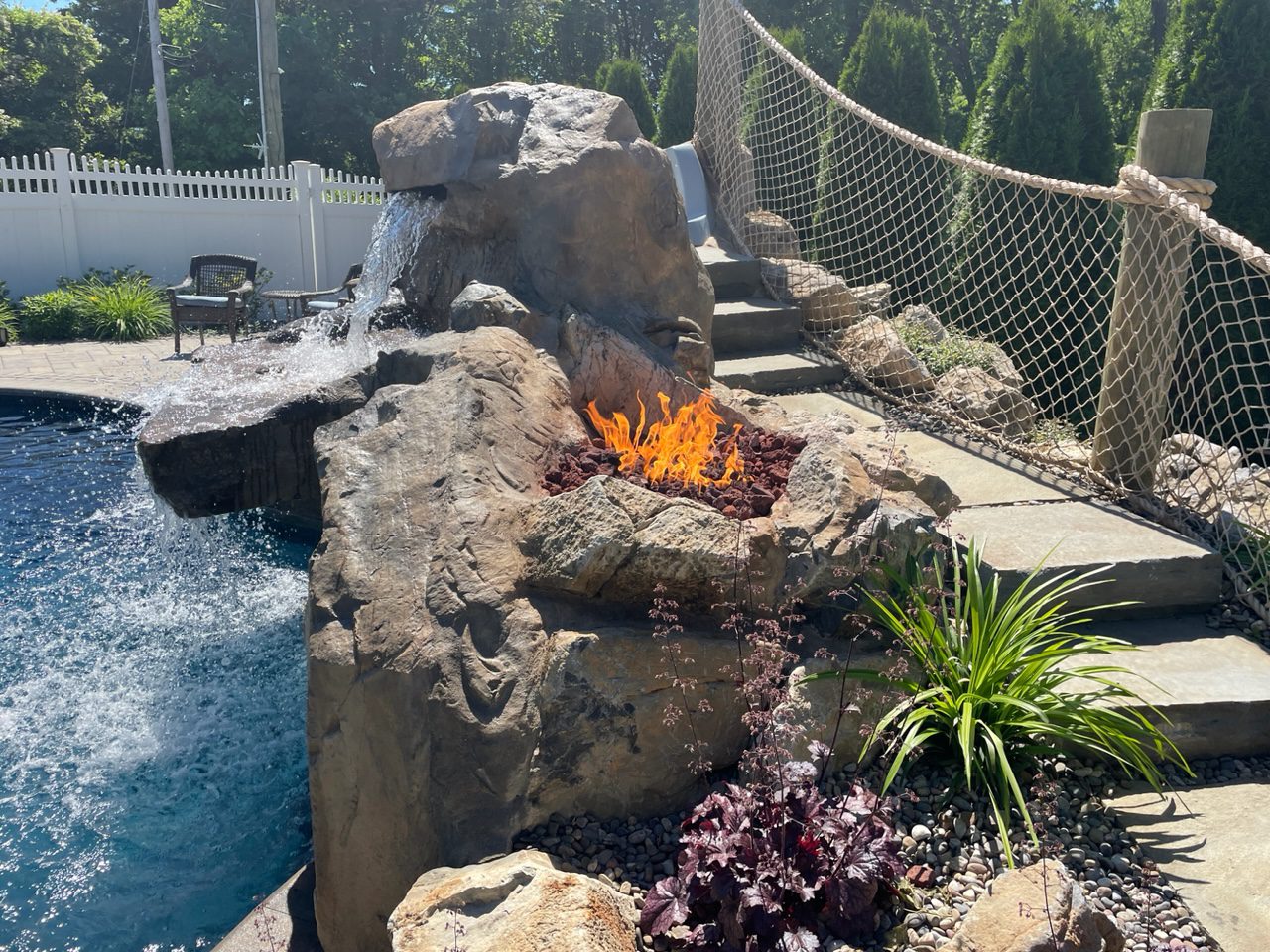
What Are Pondless Waterfalls and Where Can They Be Used Around a Pool?
Water features can make a backyard feel more relaxing, visually interesting, and connected to nature. For homeowners who want the sound and movement of flowing water without installing a traditional pond, pondless waterfalls offer a versatile solution. These features can be incorporated into gardens, landscape areas, entryways, patios, and even around custom swimming pools.
When designed as part of a complete outdoor environment, a pondless waterfall can complement pool designs, landscaping, patios, and other water features. It can also help create a more immersive backyard experience by extending the presence of moving water beyond the swimming pool itself.
This guide explains what pondless waterfalls are, how they work, where they can be used around a pool, and what homeowners should consider before adding one to a luxury backyard.
What Is a Pondless Waterfall?
A pondless waterfall is a recirculating water feature that creates the appearance of a natural stream or waterfall without using an exposed pond at the bottom.
Water flows from the top of the feature, travels over rocks or other materials, and disappears into a hidden underground reservoir or collection basin. A pump then recirculates the water back to the top, creating a continuous waterfall effect.
Unlike a traditional pond, there is no visible standing body of water at the base.
The basic system generally includes:
- A hidden water reservoir
- A recirculating pump
- Plumbing and water lines
- A basin or underground storage area
- Rock, stone, or architectural finishes
- A waterfall or stream path
- Optional lighting and landscaping
This design allows homeowners to enjoy the visual and acoustic benefits of moving water while maintaining a more flexible landscape layout.
How Does a Pondless Waterfall Work?
The system operates through continuous water recirculation.
First, water is stored in a concealed basin beneath the waterfall or at the lower end of the feature. A pump sends the water through plumbing to the top of the structure. Gravity then allows the water to flow down the waterfall or stream.
After reaching the bottom, the water enters the hidden reservoir and the process repeats.
Because the water collection area is concealed, the feature can appear as if the water is naturally disappearing into the landscape.
The exact design depends on the waterfall’s size, desired flow, elevation, materials, and surrounding landscape.
Why Choose a Pondless Waterfall for a Backyard?
Pondless waterfalls can offer several design advantages, especially when space is limited or homeowners do not want a visible pond.
A Flexible Water Feature Design
Because there is no traditional pond, pondless waterfalls can fit into a variety of spaces. They can be designed along property edges, near patios, beside walkways, or within landscaped areas around a swimming pool.
Natural Sound and Movement
Flowing water can introduce a relaxing sound to the backyard. The volume and character of the sound can be influenced by the waterfall’s height, width, rock placement, and water flow.
Integration With Landscaping
A pondless waterfall can be surrounded by boulders, plants, ornamental grasses, ground cover, and other landscape elements to create a natural appearance.
No Visible Pond Basin
Some homeowners prefer moving water without the appearance of a separate pond. The hidden collection system allows the waterfall to remain the primary visual focus.
Where Can Pondless Waterfalls Be Used Around a Pool?
One of the greatest advantages of pondless waterfalls is their flexibility. They can be positioned in several areas around a swimming pool depending on the property’s layout.
1. Along the Edge of the Pool Landscape
A pondless waterfall can be positioned within a landscaped area beside the pool.
This approach can add the sound of moving water without changing the main pool structure. Rocks and planting can create a transition between the pool deck and surrounding landscape.
This location may be especially useful when homeowners want an additional water feature but do not want to modify the swimming pool itself.
2. Near a Pool Patio or Seating Area
Positioning a pondless waterfall near a patio can create a relaxing focal point for outdoor seating.
The sound of flowing water can become part of the atmosphere while homeowners and guests use the space for dining, conversation, or relaxation.
The waterfall should be positioned carefully so it enhances the seating area without creating excessive noise.
3. Between the Pool and a Garden Area
A pondless waterfall can create a visual transition between a swimming pool and the rest of the backyard.
For example, the pool may feature clean architectural lines while a nearby garden includes a natural stone waterfall and planting. The water feature can help connect the pool environment with the broader landscape.
This approach works well when the backyard includes several outdoor zones.
4. Along a Property Slope
Sloped properties can provide an excellent setting for pondless waterfalls.
The natural change in elevation can be used to create multiple cascades or a longer stream effect. Water can travel down the slope before disappearing into a concealed basin.
This type of design can turn a challenging landscape feature into a visual advantage.
5. Near a Pool Waterfall or Grotto
A pondless waterfall can complement larger pool waterfalls by extending the water feature into another part of the landscape.
For example, the swimming pool may include a pool waterfall grotto, while a separate pondless waterfall creates another water-focused area near a garden or pathway.
The two features do not need to look identical. However, using complementary stone, planting, and materials can help maintain a cohesive design.
6. Beside an Outdoor Living Area
A pondless waterfall can also become part of a larger outdoor living environment.
It may be positioned near an outdoor kitchen, lounge, fireplace, dining space, or other entertainment area. The feature can provide a natural focal point without requiring a large footprint.
When combined with landscape lighting, the waterfall can remain visually appealing during evening gatherings.
Can a Pondless Waterfall Be Connected Directly to a Swimming Pool?
In some custom pool designs, water features can be integrated directly with the pool’s circulation and visual concept. However, a pondless waterfall is generally understood as a separate recirculating feature with its own concealed collection system.
Whether a specific waterfall can or should be connected to a swimming pool depends on the design, plumbing, filtration, circulation requirements, and local construction considerations.
For this reason, the system should be evaluated during the planning stage rather than assuming all water features can operate from the same equipment.
What Is the Difference Between a Pondless Waterfall and a Pool Waterfall?
Although both create moving water, they serve different purposes.
Pondless Waterfall
A pondless waterfall is typically a landscape water feature. Water flows into a hidden reservoir rather than directly into a swimming pool.
It can be located near the pool or elsewhere in the backyard.
Pool Waterfall
A pool waterfall is designed as part of the swimming pool. Water flows directly into the pool and is typically coordinated with the pool’s circulation and water feature systems.
A pool waterfall may be built into:
- Natural rock structures
- Raised walls
- Grottos
- Spas
- Architectural spillways
- Custom water feature structures
Both can be used in the same backyard to create different experiences.
Can Pondless Waterfalls Be Combined With Pool Slides and Grottos?
Yes, although each feature should have a clear purpose within the overall design.
A luxury backyard could include pool slides waterfalls as part of the main swimming area while using a separate pondless waterfall in a nearby landscape zone.
Similarly, a swim-in grotto can create an interactive experience within the pool, while a pondless waterfall can provide a quieter visual and acoustic feature elsewhere on the property.
This layered approach can help create different zones for recreation and relaxation.
What Design Styles Work Best for Pondless Waterfalls?
Pondless waterfalls can be designed in several styles.
Natural Rock Waterfalls
Natural stone, boulders, varied textures, and planting can create the appearance of a waterfall found in a natural landscape.
Contemporary Waterfalls
Modern designs may use clean stone surfaces, structured walls, linear spillways, and controlled water flow.
Multi-Level Waterfalls
Properties with elevation changes may support multiple cascades, creating a longer visual journey for the water.
Small Accent Waterfalls
A compact pondless waterfall can work as a secondary landscape feature near a patio, pathway, or pool seating area.
Dramatic Waterfalls
Larger designs with significant elevation and strong water flow can create a bold focal point. In some projects, these may share characteristics with extreme waterfalls, depending on their scale and design.
How Can a Pondless Waterfall Complement a Luxury Pool Design?
A luxury backyard does not need every water feature to be attached directly to the pool.
A pondless waterfall can extend the feeling of the pool environment into the surrounding landscape. It can introduce movement and sound in areas where a traditional pool waterfall would not be practical.
For example, a complete design may include:
- A custom swimming pool
- A natural rock pool waterfall
- A swim-in grotto
- A pool slide
- A separate pondless waterfall
- Fountain waterfalls
- Landscape lighting
- Outdoor seating
- Integrated planting
The key is to create visual consistency. Stone finishes, plant selections, lighting, and architectural details can help connect the individual elements.
How Do Pondless Waterfalls Work With Modern Pool Designs?
Pondless waterfalls are not limited to natural or tropical landscapes.
In a contemporary backyard, the feature can use geometric forms, clean materials, and controlled water movement. A linear water wall or architectural cascade can create a modern interpretation of a pondless waterfall.
The surrounding pool designs Mount Sinai, NY may include straight edges, large-format materials, minimal planting, and structured outdoor spaces.
The water feature should complement the home’s architecture rather than introducing an unrelated design style.
What Should You Consider Before Installing a Pondless Waterfall?
Several factors should be evaluated before construction.
Available Space
The waterfall and hidden reservoir require adequate space. The surrounding area also needs to accommodate landscaping and equipment access.
Desired Water Flow
A gentle cascade and a dramatic waterfall require different levels of water movement and equipment capacity.
Elevation
Changes in elevation can influence the waterfall’s design and appearance.
Access for Maintenance
Pumps, plumbing, and other equipment should remain accessible for inspection and maintenance.
Relationship to the Pool
If the feature is located near a swimming pool, the design should account for circulation, drainage, splash zones, pathways, and surrounding hardscaping.
Overall Backyard Style
Materials and finishes should coordinate with the pool, patio, landscaping, and home architecture.
Are Pondless Waterfalls Suitable for Small Backyards?
They can be.
A pondless design can be a practical option when homeowners want a water feature but do not have space for a large pond. A compact waterfall can fit into a garden bed, corner landscape area, or along a property boundary.
The scale should be appropriate for the available space. A smaller waterfall can still create an attractive focal point when designed with the correct proportions.
How Can Lighting Improve a Pondless Waterfall?
Lighting can highlight flowing water, stone textures, planting, and changes in elevation.
During the evening, carefully positioned lights can make the waterfall visible without overpowering the surrounding backyard.
Lighting can also help visually connect a pondless waterfall with other water features, including fountain waterfalls, pool waterfalls, or a grotto.
A coordinated lighting plan is especially valuable when the backyard is frequently used for evening entertainment.
Why Is Professional Design Important for Pondless Waterfalls?
A successful pondless waterfall involves more than arranging rocks and adding a pump.
Water flow, pump capacity, plumbing, drainage, reservoir size, material placement, and landscaping all influence performance and appearance.
When the feature is being added around a custom swimming pool, the planning process becomes even more important. The waterfall should complement existing or planned pool features without interfering with circulation, access, drainage, or the overall visual design.Outdoor Living FX can help homeowners consider pondless waterfalls as part of a broader outdoor environment that includes custom pools, pool waterfalls, grottos, landscaping, and other luxury outdoor features.
Create a More Complete Outdoor Water Experience
Pondless waterfalls offer a flexible way to bring the movement and sound of water into a backyard without adding a traditional pond. They can be placed beside a pool, within landscaping, near patios, along slopes, or in separate outdoor living areas.
When planned as part of a complete landscape, they can complement pool waterfalls, slides, grottos, fountain features, and other water elements without competing with the swimming pool.
For homeowners planning a custom pool environment, Outdoor Living FX can help explore how pondless waterfalls and other water features can work together as part of a cohesive outdoor living design. Whether the goal is a compact landscape cascade or a larger natural rock feature, the best pondless waterfall is one that fits naturally into the property’s architecture, landscape, and overall backyard experience.
Frequently Asked Questions About Pondless Waterfalls
What is a pondless waterfall?
A pondless waterfall is a recirculating water feature where water flows over a waterfall or stream and disappears into a hidden underground reservoir rather than an exposed pond.
Where does the water go in a pondless waterfall?
The water collects in a concealed basin or underground reservoir. A pump then recirculates it back to the top of the waterfall.
Can a pondless waterfall be installed near a swimming pool?
Yes, a pondless waterfall can be incorporated into landscape areas around a pool. Its placement and design should account for the pool layout, drainage, pathways, and surrounding outdoor spaces.
What is the difference between pondless waterfalls and pool waterfalls?
A pondless waterfall typically recirculates water through a hidden reservoir, while a pool waterfall sends water directly into the swimming pool.
Are pondless waterfalls suitable for small backyards?
Yes. Compact pondless waterfalls can be designed for smaller landscape spaces, depending on the available area and desired feature size.
Can a pondless waterfall be part of a luxury backyard?
Yes. It can complement custom pools, patios, gardens, outdoor seating areas, and other water features to create a more complete outdoor environment.
Can I combine a pondless waterfall with a pool waterfall grotto?
Yes. A pool waterfall grotto can serve as a major pool feature while a pondless waterfall can create a separate water feature elsewhere in the landscape.
Do pondless waterfalls work on sloped properties?
Yes. Changes in elevation can be used to create multi-level cascades and longer waterfall designs.
Can pondless waterfalls have lights?
Yes. Landscape and water-feature lighting can be integrated to highlight the waterfall, rocks, planting, and flowing water during the evening.
Are pondless waterfalls the same as fountain waterfalls?
Not necessarily. Fountain waterfalls usually describe a different style of water movement or feature. A pondless waterfall is defined primarily by its hidden water collection system and recirculating design.
